
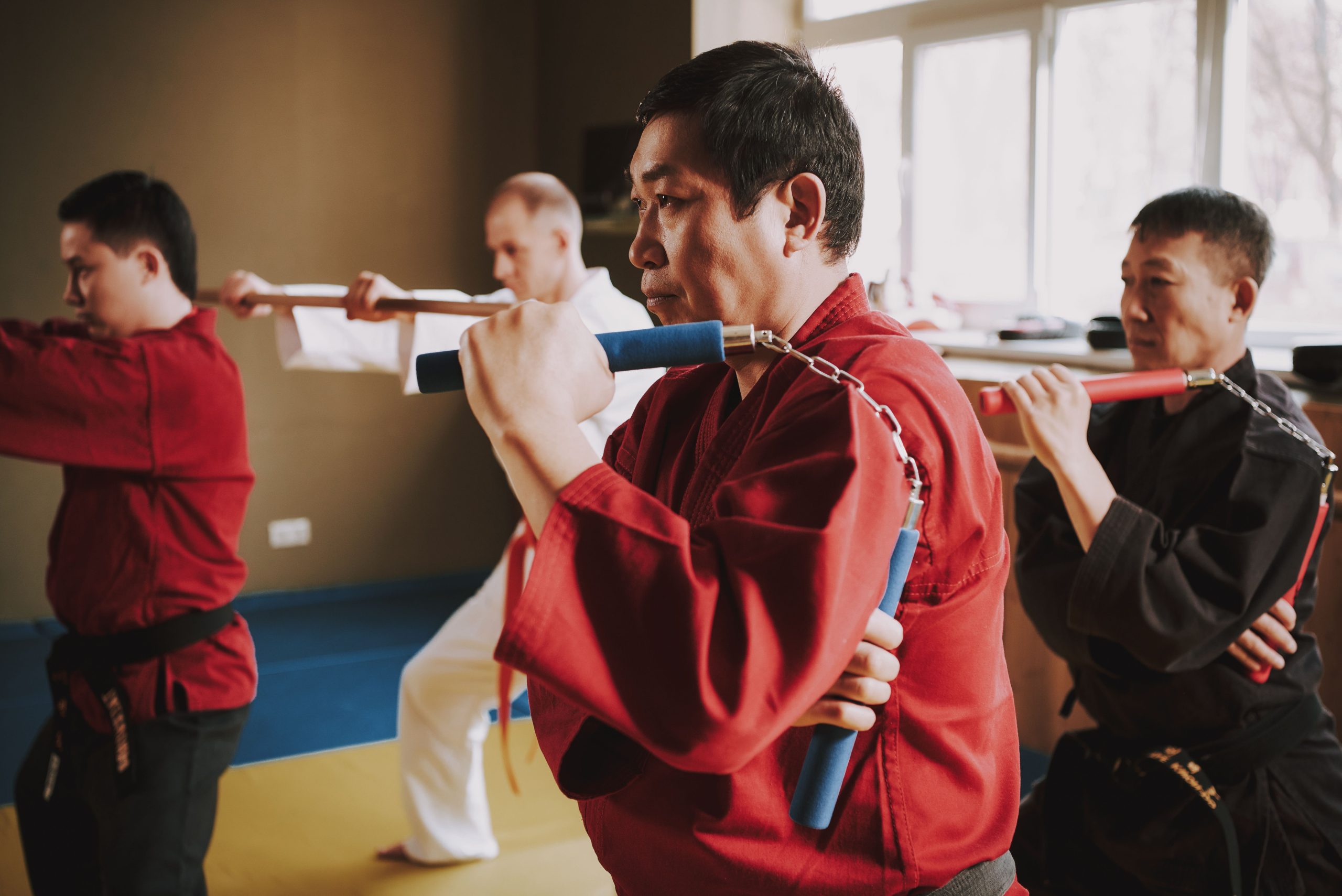
Nunchucks: Speed, Control, and the Art of Fluid Motion
Nunchucks – also called nunchaku – are one of the most iconic weapons in martial arts. Popularized by films, demonstrations, and competitive tricking, these fast-moving twin sticks connected by rope or chain are far more than flashy performance tools. In traditional practice, nunchaku training develops timing, coordination, and precision in ways few other weapons can match.
Whether you study karate, kobudo, taekwondo, modern freestyle, or simply want to explore classical weapons, nunchucks offer a challenging and exciting path for martial artists at every level.
A Brief History of Nunchaku
The origins of the nunchaku are often traced to Okinawa, though the exact story remains debated. Some theories suggest they evolved from agricultural tools, while others point to influences from Chinese martial arts. Regardless of their beginnings, nunchucks eventually became part of Okinawan kobudo and were used for close-range striking, trapping, and joint-control techniques.
Their rise to global recognition came much later – thanks in part to martial arts cinema – but the traditional methods remain rooted in practical movement and disciplined training.
Why Train With Nunchucks?
1. Lightning-Fast Coordination
Nunchucks train both sides of the body through patterns requiring sharp reflexes, smooth transitions, and split-second timing. The weapon rewards precision and punishes hesitation – making it a fantastic tool for developing hand-eye coordination.
2. Fluidity and Flow
Unlike rigid weapons, nunchucks are dynamic. They swing, rebound, wrap, and circle. Learning to control that energy builds your ability to stay relaxed, redirect force, and move fluidly – all essential qualities in martial arts.
3. Range Versatility
Nunchucks offer multiple ranges:
• Long-range swinging for striking
• Mid-range flailing for intercepting
• Close-range trapping or locking
• Rapid snapping strikes for quick defensive responses
This adaptability makes them one of the most versatile traditional weapons.
4. Cross-Training Benefits
Skills developed with nunchucks carry over into:
• Stick work
• Empty-hand striking
• Footwork and timing
• Freestyle and performance martial arts
The increased awareness and dexterity also help with weapons like sai, tonfa, and kama.
Key Techniques in Nunchaku Training
Basic Strikes
Beginners start with controlled, linear strikes:
• Downward
• Upward
• Horizontal
• Diagonal
• Thrusting techniques
Solid basics prevent sloppy form and reduce the chances of self-inflicted hits – an inevitable rite of passage!
Figure-Eight Patterns
Figure-eights teach continuous movement, building rhythm, flow, and the ability to change angles quickly.
Hip, Shoulder, and Underarm Catches
These control points help redirect momentum. Proper catches turn raw swinging power into refined technique.
Switching Hands
Transitions between right and left develop ambidexterity and open new combinations.
Wrapping and Rebounds
Advanced practitioners learn to wrap the nunchucks around the body, redirecting their path into new strikes or defensive movements.
Training Safely
Because of their speed and flexibility, nunchucks demand respect:
• Beginners should start with foam or padded nunchucks.
• Train in a spacious, open area free from people or breakable objects.
• Wear wrist guards or gloves at first, especially when learning rebounds.
• Practice slow and smooth before practicing fast.
• Focus on control, not power.
And perhaps most important: be patient. Everyone hits themselves at some point – it’s part of learning.
Traditional vs. Freestyle Nunchaku
Traditional
Rooted in kobudo, traditional nunchaku emphasize:
• Linear strikes
• Targeted blocking
• Trapping
• Footwork
• Partner drills
• Practical application
The focus is on efficiency and martial realism.
Freestyle
Modern freestyle nunchaku prioritize:
• Spins
• Throws
• Complex combinations
• Flow arts
• Performance expression
While less combative, freestyle improves dexterity, rhythm, and creativity.
Many practitioners blend both worlds – traditional skills for structure, freestyle for artistry.
Why Nunchucks Remain Popular Today
Nunchucks stand out because they’re:
• Fun to learn
• Visually dynamic
• Challenging in a rewarding way
• Beneficial across multiple martial arts disciplines
• Rich in tradition and creativity
From self-defense principles to performance choreography, nunchaku practice teaches patience, body awareness, and the ability to move with calm control under pressure.
For martial artists seeking a weapon that sharpens the mind as much as the body, nunchucks are an excellent – and energizing – choice.
