
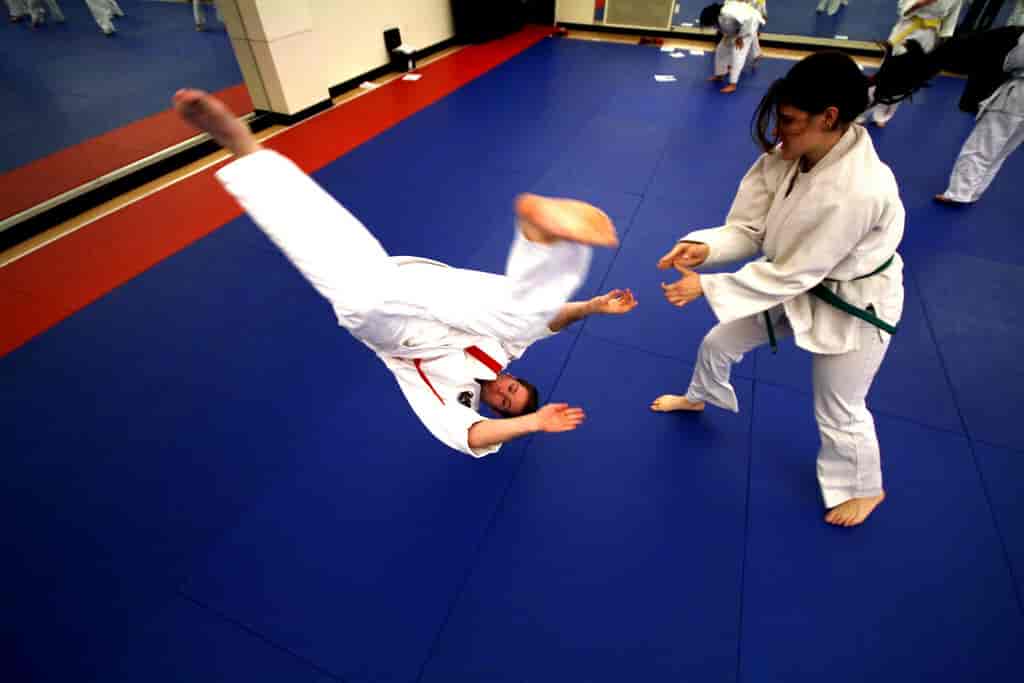
Hap Ki Do (also spelled Hapkido) is one of Korea’s most dynamic and versatile martial arts. Known for its fluid circular movements, powerful joint locks, precise kicks, and seamless blend of offense and defense, Hap Ki Do offers a complete system that emphasizes efficiency, adaptability, and control.
Whether you’re drawn to practical self-defense, traditional martial culture, or a well-rounded training experience, Hap Ki Do stands out as a martial art with depth, grace, and real-world effectiveness.
What Does “Hap Ki Do” Mean?
The name “Hap Ki Do” (합기도) breaks down into three core concepts:
• Hap (합) – Harmony, coordination, unity
• Ki (기) – Internal energy, spirit, or vital power
• Do (도) – The way, the path, or the discipline
Together, Hap Ki Do translates to “the way of coordinating energy.”
Its philosophy centers on blending with an opponent’s force, redirecting it, and applying technique rather than relying on strength alone.
A Martial Art with Deep Roots
Hap Ki Do evolved from a blend of:
• Traditional Korean martial practices
• Daito-ryu Aiki-jujutsu, a Japanese grappling art that later influenced aikido
• Korean kicking methods, including early Taekkyon and later Taekwondo-style footwork
This fusion created a uniquely balanced martial art – one that integrates the grappling and joint manipulation of Japanese Ju Jitsu with the fluid kicks and striking of Korean tradition.
What Makes Hap Ki Do Unique?
Hap Ki Do is often described as a complete self-defense system because it covers every range of combat:
1. Joint Locks and Controls
Wristlocks, armlocks, shoulder pins, and pressure-point techniques allow practitioners to restrain or redirect opponents with precision.
2. Throws and Sweeps
Circular footwork and off-balancing principles enable smooth, efficient throws similar to judo but with a more flowing, non-resistive approach.
3. Dynamic Kicking Techniques
Hap Ki Do features:
• High spinning kicks (though, I personally don’t like high kicks and don’t include them in our training)
• Powerful jump kicks
• Low defensive kicks
• Fast combination kicking
The kicks are similar to those practiced in Taekwondo but are used primarily for self-defense and control rather than sport.
4. Strikes and Blocks
Practitioners use targeted palm strikes, elbows, knees, and pressure strikes to break balance or create openings for locks and throws. Most of the strikes can be used as blocks and as defense as well as offense.
5. Weapons Training
Many schools teach traditional weapons, including:
• Bo Staff
• Cane
• Knife defense
• Rope techniques
• Short sticks (Jo Staff)
These tools enhance coordination, timing, and confidence. They also allow for the extension of your body and power.
The Principles Behind Hap Ki Do
Three fundamental concepts guide Hap Ki Do practice:
1. Non-Resistance (Yu, 유)
Move with your opponent’s force, not against it – like water flowing around an obstacle.
2. Circular Motion (Won, 원)
Use round movements to redirect attacks, build momentum, and maintain continuous flow.
3. Harmony of Energy (Hwa, 화)
Blend your movements with your opponent’s, using timing and awareness to apply technique efficiently.
These concepts shape Hap Ki Do into a martial art that values strategy and finesse over brute force, making it suitable for practitioners of all ages and body types.
Training Benefits
Practicing Hap Ki Do offers a wide range of physical and mental benefits:
Physical Gains
• Improved flexibility and mobility
• Increased balance and coordination
• Functional strength
• Cardiovascular conditioning
• Full-body awareness
Mental Growth
• Discipline and patience
• Calmness under pressure
• Strategic thinking
• Enhanced focus
Self-Defense Confidence
Students learn how to handle:
• Strikes
• Grabs
• Chokes
• Tackles
• Multiple attackers
• Armed threats
All within a controlled and respectful training environment.
Why Hap Ki Do Matters Today
In an era where self-defense, fitness, and personal development are highly valued, Hap Ki Do offers a practice that bridges tradition and practicality. Its techniques are adaptable to real-world scenarios, yet its philosophy encourages harmony, respect, and a peaceful mindset.
For students seeking a martial art that is complete, balanced, and deeply rooted, Hap Ki Do provides a rewarding lifelong journey.
Example
