Martial arts is more than just fighting techniques, conditioning, and forms. Martial arts is an expression of deep philosophies. Among the most influential of these philosophies is Daoism, the ancient Chinese worldview that has shaped the internal arts, informed strategy, and guided generations of martial artists toward mastery.
In this post, we’ll explore what Daoism is, why it matters in martial arts, and how its principles can elevate both your training and your life.
⸻
What Is Daoism?
Daoism (also written Taoism) is a philosophical and spiritual tradition originating in China more than 2,000 years ago. At its heart is the concept of the Dao (“The Way”) – the natural, spontaneous order of the universe. Daoism teaches that harmony comes from living in alignment with this flow rather than fighting against it.
Two foundational texts shape Daoist thought:
• The Dao De Jing, attributed to Laozi
• The Zhuangzi, a collection of parables and teachings emphasizing freedom and naturalness
While Daoism has religious branches, the philosophical aspects – simplicity, balance, yielding, and awareness – are the ones most tightly connected to martial arts.
You don’t need to follow the religious side of Daoism to take advantage of the principles it teaches.
⸻
Daoism in Martial Arts
Many traditional martial arts, especially Chinese internal styles such as Tai Chi, Bagua Zhang, and Xingyi, are built upon Daoist principles. But even external styles and modern fighting systems can benefit from the wisdom embedded in Daoism.
Here are some of the core Daoist concepts that influence a more effective practice of martial arts:
⸻
1. Wu Wei – Effortless Action
Wu Wei is not “doing nothing.” It’s doing without forcing – letting actions arise naturally from skill and awareness.
In martial arts, Wu Wei appears as:
• Smooth transitions without hesitation
• Striking or defending with relaxed efficiency
• Moving from the center instead of muscling techniques
• Reacting in an automated way, without thinking
A master’s technique looks effortless not because it lacks effort, but because it is free of waste.
⸻
2. Yin and Yang – Dynamic Balance
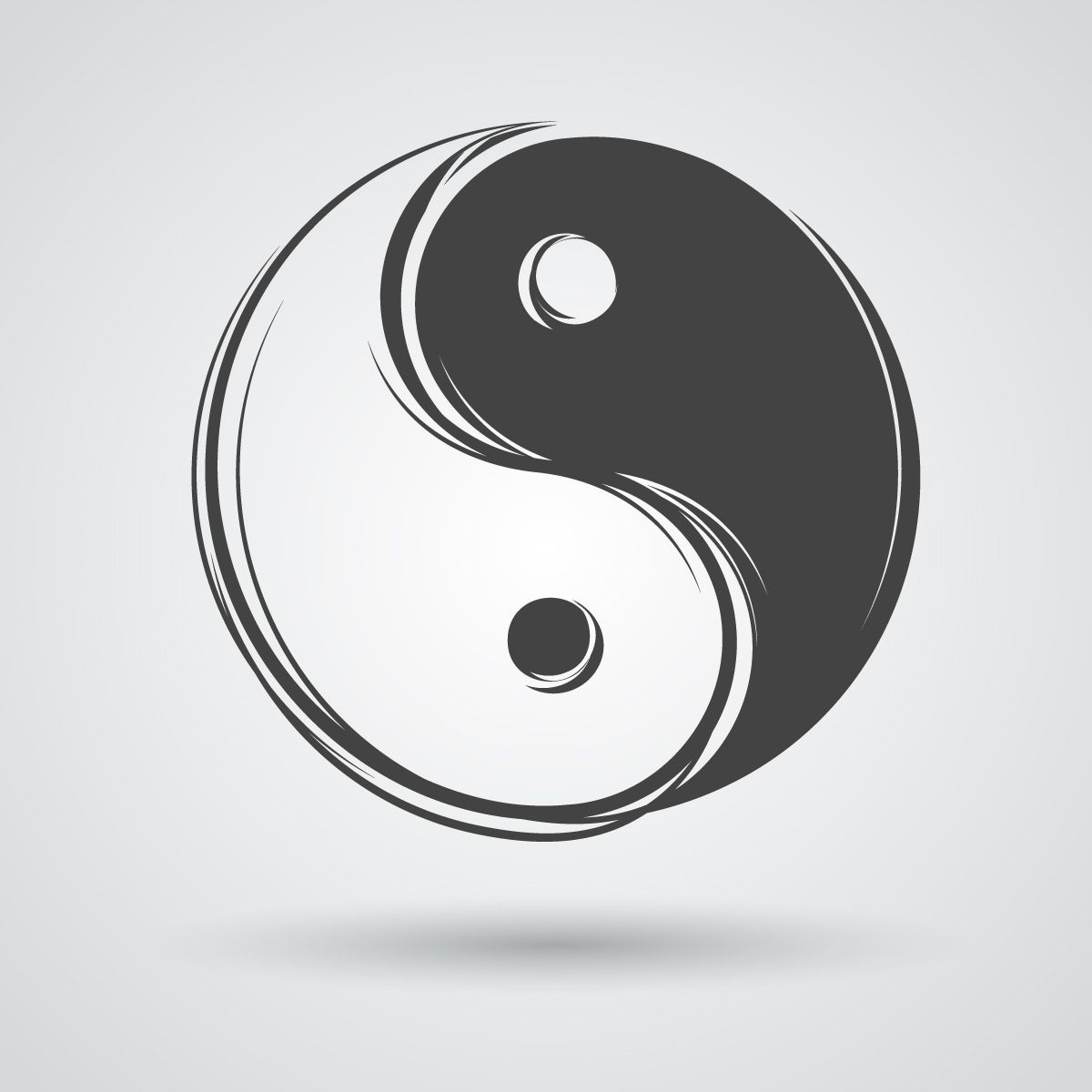
The famous Yin-Yang symbol represents complementary forces: soft/hard, slow/fast, retreat/advance, internal/external.
Martial arts apply this balance through:
• Softening to absorb force, then hardening to issue power
• Alternating speed and stillness
• Blending with an opponent instead of clashing
A balanced practitioner is never stuck in one mode. They adapt fluidly to the situation. This makes one very unpredictable.
⸻
3. Ziran – Naturalness
Ziran means being true to your own nature. In training, this principle encourages:
• Movements that fit your body type
• Techniques that emerge organically under stress
• A style of fighting that reflects who you are
Instead of rigid imitation, Daoism promotes authentic expression. Creativity, not an exact plan, allows the best response in the moment.
⸻
4. Qi – The Vital Energy
While interpretations vary, Qi in martial arts generally refers to:
• Coordinated breathing
• Intent-driven movement
• Whole-body power generated from alignment and natural flow
Qi is not mystical. It’s the integration of breath, structure, and focus into a unified movement.
⸻
How Daoism Elevates Your Training
Applying Daoist principles can transform your martial arts journey.
• Better relaxation under pressure
Yielding and softness prevent fatigue and improve reaction time.
• More efficient technique
Effortless action minimizes wasted motion and maximizes power.
• Greater adaptability
Understanding Yin and Yang helps you shift strategies instantly.
• Enhanced mental clarity
Daoist philosophy encourages calm observation and present-moment awareness (a crucial skill in both sparring and self-defense).
⸻
Daoism Beyond the Dojo
Daoism isn’t limited to combat. It encourages:
• Letting go of unnecessary tension
• Accepting change
• Simplifying your life
• Responding instead of reacting
Ultimately, Daoism helps practitioners cultivate a mindset that supports resilience, growth, and peace – on and off the mat.
⸻
Conclusion
Daoism offers martial artists a framework for understanding movement, energy, and adaptability at a profound level. Whether you practice an internal style or a modern combat system, embracing Daoist principles can deepen your technique and enrich your training experience.
It helps you understand your interactions with others, how to deal effectively with conflict, and how to dynamically and effortlessly choose the best action for the moment at hand.
If martial arts is a path, Daoism is the wisdom that helps you walk it with grace.