Ever wonder why some students’ progress seems lightning-fast while others plateau for years? The difference isn’t always talent, strength, or how many hours they spend on the mat. The real game-changer is understanding and harnessing the power of what I like to call the Snowball Learning Process.
What Is Snowball Learning in Martial Arts?
Snowball learning means drawing insights from unrelated fields to enhance your primary focus – in this case, martial arts training. Think of it as cross-training for the mind. Traditional martial arts instruction emphasizes discipline and technique. By incorporating ideas from science, arts, and strategy, you can optimize your body and mindset.
Why does this work? Research in cognitive science shows that connecting new information to existing knowledge strengthens neural pathways, leading to faster retention and application. For martial artists, this translates to quicker skill acquisition and reduced injury risk.
You become better faster.
Snowball learning means refusing to stay inside the “martial arts box.” You actively import concepts from:
- Physics & engineering
- Neuroscience & psychology
- Chess & military strategy
- Dance & gymnastics
- History & philosophy
- Biology & biohacking
- Art & music
Every new domain gives you an unfair advantage, because most people that train in martial arts never look beyond the tunnel vision they have for what they consider part of their martial arts training.
Leonardo Davinci was one of the most accomplished people who ever lived. He excelled in several (what appear to be) very different areas.
But to him, they weren’t different in an exclusionary way. They were different in a way that added insights that would maybe never be found just studying one topic in a silo.
Mastery Through Repetition and Refinement
Martial arts training is not a straight climb – it’s a constantly evolving cycle. You learn a technique, practice it, struggle with it, improve it, and then eventually return to it with deeper understanding. This continuous loop is accelerated by stacking concepts on top of each other, and it’s the foundation of true martial arts mastery.
Each cycle brings greater awareness, efficiency, and precision. The technique stays the same, but you evolve.
Example 1: Applying Physics to Enhance Strikes and Movement
Physics isn’t just for classrooms. It’s a secret sauce in martial arts. Understanding concepts like force, momentum, and leverage can supercharge your punches, kicks, throws, grappling, etc.
- Force and Momentum: In taekwondo and karate, a powerful kick relies on Newton’s laws. Generate more force by increasing mass (using your whole body) or acceleration (snapping your limb faster) or by using centripetal force. Visualize a punch: It’s not about raw strength but transferring kinetic energy efficiently.
- Balance and Center of Gravity: Borrow from biomechanics to maintain stability during throws in jiu-jitsu. Lowering your center of gravity makes you harder to topple, much like in wrestling or even yoga.
- Practical Tip: During warm-ups, experiment with slow-motion drills while thinking about trajectories. This builds intuition, helping you adjust in real-time during sparring.
By integrating principles of physics, students often report breaking through technique plateaus faster.
Example 2: Psychology for Mental Toughness and Focus
Martial arts is as much mental as physical. Drawing from psychology can help you build resilience, manage fear, and stay focused under pressure.
- Growth Mindset from Carol Dweck’s Research: View challenges as opportunities, not threats. Instead of frustration from a failed technique, analyze it like a psychologist would a behavior pattern.
- Flow State from Mihaly Csikszentmihalyi: Achieve peak performance by balancing challenge and skill level. In training, this means progressing from basic katas to complex sparring, mimicking how athletes in other sports zone in.
- Visualization Techniques: Used by elite athletes, mentally rehearse moves to wire your brain for success. This cross-over from sports psychology can shave weeks off learning curves.
The more you can train your mind to see and process what your body (and that of your opponent) is doing, the better you’ll be able to shed the unimportant and do more of what actually works.
Example 3: Strategy from Games Like Chess for Tactical Sparring
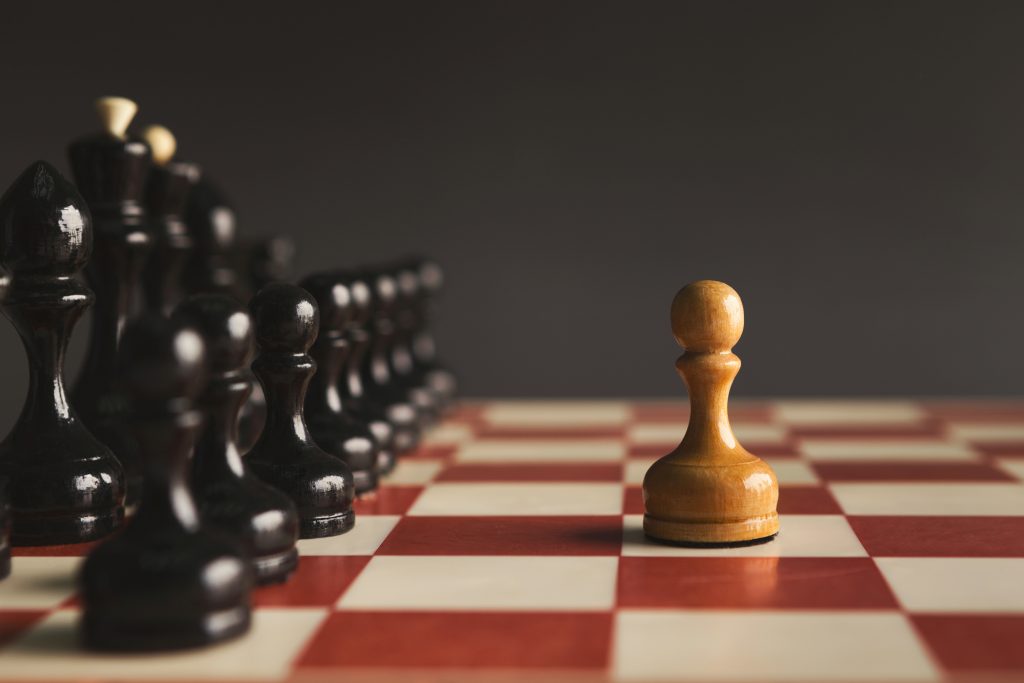
Chess and martial arts share a core element: strategy. Applying board game tactics to the mat can deepen your decision-making and anticipation skills.
- Positioning and Control: In chess, controlling the center board is crucial; in martial arts, dominate the space around your opponent. Use feints to set up attacks, just like sacrificing a pawn for a better position.
- Anticipation and Patterns: Recognize patterns in your opponent’s moves, similar to studying chess openings. This foresight turns reactive fighting into proactive dominance.
- Endgame Thinking: Plan several moves ahead, adapting to counters. This is invaluable in MMA or Brazilian jiu-jitsu, where matches can turn on a dime.
As you learn to think like your opponent and see their actions like player moves in a game, you’ll be able to see the situation unfold like a standard scenario in your favorite game.
Example 4: Arts and Movement Disciplines for Fluidity and Expression
Don’t overlook creative fields. Dance, yoga, or even music can enhance martial arts by improving rhythm, flexibility, and expression.
- Dance for Footwork: Ballet or hip-hop teaches intricate foot patterns, perfect for evasive maneuvers and attacks in sparring.
- Yoga for Breath Control: Pranayama techniques build endurance, helping you maintain composure in long training sessions, sparring, and grappling.
- Music for Timing: Train to music with heavy beats to refine rhythm in strikes, borrowing from rhythmic gymnastics.
Example 5: Physical Activities Like Rock Climbing and Snowboarding
This seems pretty obvious. But I’m amazed at how often martial artists fail to see the shared skills from something they’re already good at.
- Rock Climbing: When you’re scaling a climbing wall and have to find the correct hand or foothold, you learn to spot helpful things in your surroundings. You’ll also learn how small movements in your body position can affect your entire balance as well as from where you might generate power in a particular direction.
- Snowboarding: Coming down a snow covered mountain with a board strapped to your feet will teach you more about balance than you know. One false flick of your front foot can cause your edge to act like a brake and slam you face first into the side of the hill. Dynamic balance and a highly developed sense of how to use your center of gravity are priceless skills.
- Surfing: One of the most difficult things I’ve learned is surfing. You start on your stomach and have to use your arms to generate speed and have the perfect timing to meet a wave at the just the right time to transfer the momentum you created to the ocean. Then, you try to stay up on a board that is moving in every direction on a giant wall of water that is waiting for you to miscalculate just enough to throw you down into a bed of sand and then tumble you over and over again. There are so many skills you learn here that can be used in martial arts if you look.
By weaving knowledge from other areas where you have experience and skill into your martial arts journey, you’ll learn faster, train smarter, and achieve deeper mastery. This approach not only enhances skills but also enriches the experience, helping make martial arts a lifelong pursuit.